
Devorah Epelgrad Cohn
Introduction

Devorah (Dweira) Epelgrad Cohn was born in 1916, in Slonim, Poland (modern day Belarus). She was the eighth of ten children born to Rabbi Yaakov Zundel Epelgrad and Toibe Alte Epelgrad. Her father was a respected Jewish scholar who served as the bochein (examiner) as well as fundraiser for the Slonimer Yeshiva. He regularly travelled to America to raise money for the Yeshiva. Because travel was so difficult and expensive, he stayed for three years each time he went. He died of pneumonia during one of his trips to New York, in 1932, when Devorah was fifteen. Devorah’s sister, Rochel (later: Rochel Bina), had a small shop known as a kreml, where she sold goods, including baked goods and homemade ice cream that their mother made. Devorah grew up in a house with many family members. Devorah’s grandfather, Eliezer Kwiat, known to all in Slonim as “feter Lazier,” (feter means uncle in Yiddish) and his sister lived with the family. Additionally, her sister Feigel married and had five children, who all lived in the same house.


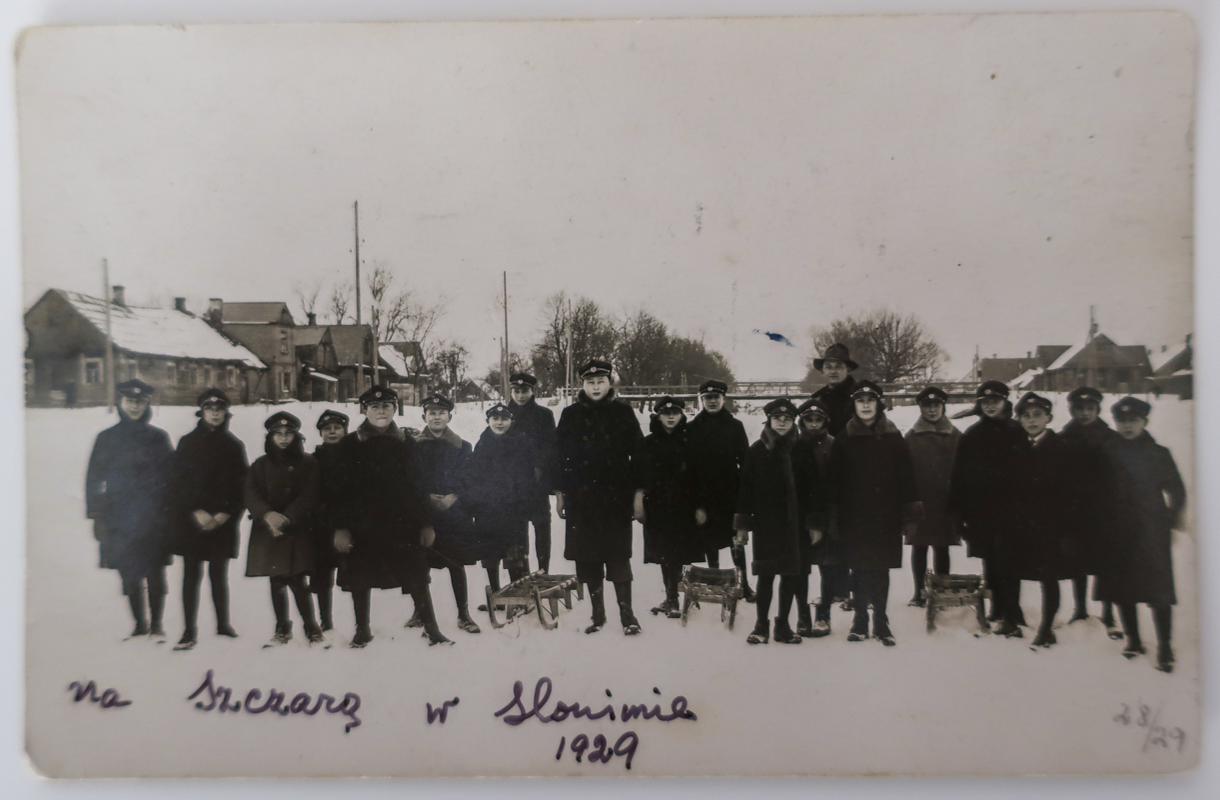
Slonim, Poland
Devorah attended a regular Polish elementary school, and a secular Jewish gymnasium (high school). In gymnasium, Devorah got into arguments with the teachers, and complained to her parents that the school was not religious enough. The last time Devorah saw her father was in 1930 on one of his visits back home. While in Slonim, he promised Devorah that she could attend the Bais Yaakov Teachers’ Seminary in Krakow. Devorah worked hard on her application: studying, getting recommendations, and filling out forms. However, her father’s untimely death made the already expensive school even more of a financial burden. Devorah and her brother went to the Slonimer Rebbe, Reb Avromchik Weinberg, to seek advice. He told them “shikt ihr [send her].” Her sister, who owned the kreml, offered to pay the monthly tuition, and Devorah was able to go.


Krakow, Poland
Devorah began her time at the seminary in 1933 after a long train ride to Krakow:
I did not start school at the beginning of the academic year. I came three months late. In the seminary there was no summer vacation. We went home for Pesach and for the Yamim Nora’im (High Holy Days). As a result the school year would start in Teves (December/January). The three months of my first year that I missed were Teves, Shevat and Adar. I traveled to the seminary for the first time with those students who were returning after Pesach. For the first part of the trip, from Slonim to Bialystock, I travelled alone. Then in Bialystock I met others who were traveling from Lithuania…. The trip itself took 20 hours. It was such a difficult trip. As far as I remember I had one valise. I had no books.
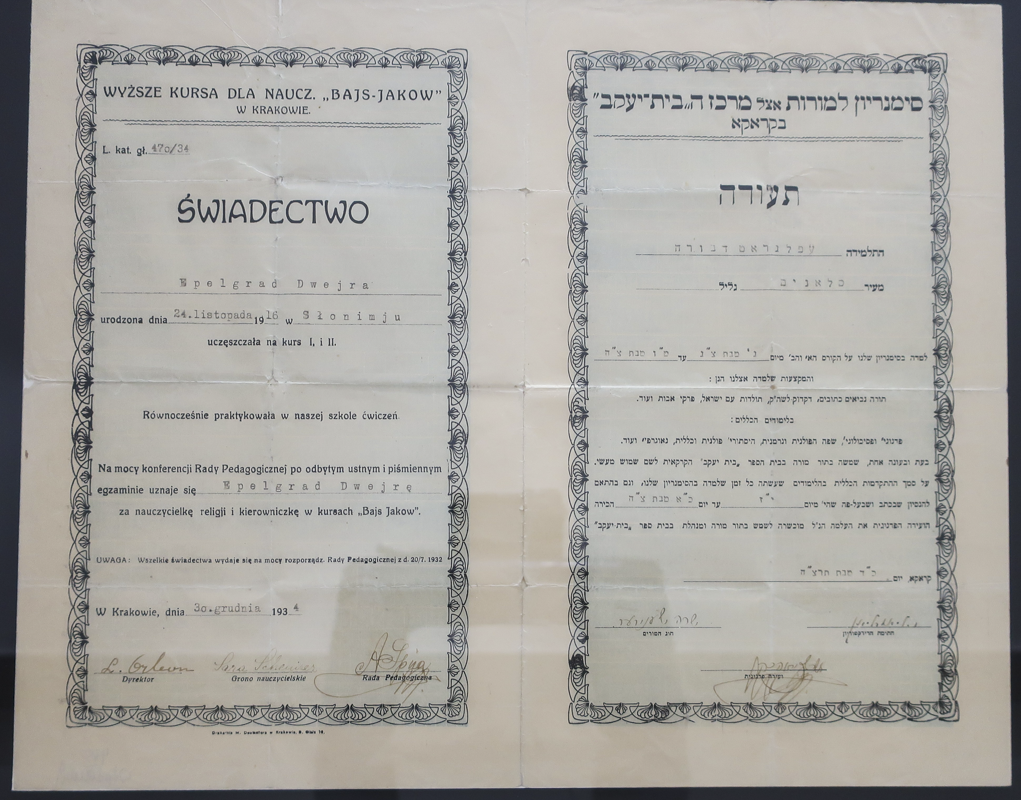
Devorah loved it at the Krakow teachers’ seminary; she described the buildings as luxurious and the food as wonderful. Recounting the moment she arrived at Bais Yaakov, she said, “I felt that at last I was fulfilling the dream that I had had for so long.”
Though she had different relationships with each teacher, two stood out as her favorites: “Herr Orlean” and Sarah Schenirer. Devorah described Yehuda Leib Orlean, who taught Jewish history: “His lectures were outstanding…. He was very frum with a long beard. He was very intelligent. He spoke the best Yiddish. He built his speeches so beautifully.”Devorah clearly held Sarah Schenirer, with whom she studied three times a week, in extremely high regard: “I still remember the first time that I met her. Her eyes were so sharp, so smart, durchdrenge [penetrating]. With the first glance, she looked you through and through.” Schenirer would dance with the students on holidays, such as Purim and Shabbat. Schenirer was generous and dedicated to her students; Devorah often recounted the story of how when her tuition payment came late one month, Schenirer still allowed her to attend Schenirer’s own classes, despite the school-wide rule that if tuition didn’t arrive on time every month, the student wouldn’t be allowed to attend classes. Tuition was 100 zlotys a month or 1,200 zlotys per year, about $4,800 in today’s US dollars.
Although they did not have a summer vacation in the usual sense, the Bais Yaakov girls spent the summers in the mountains where they could experience nature outside of Krakow, as pictured below.
She graduated from the teachers’ seminary in less than two years, in December of 1934.




Ruzhan (Różan)
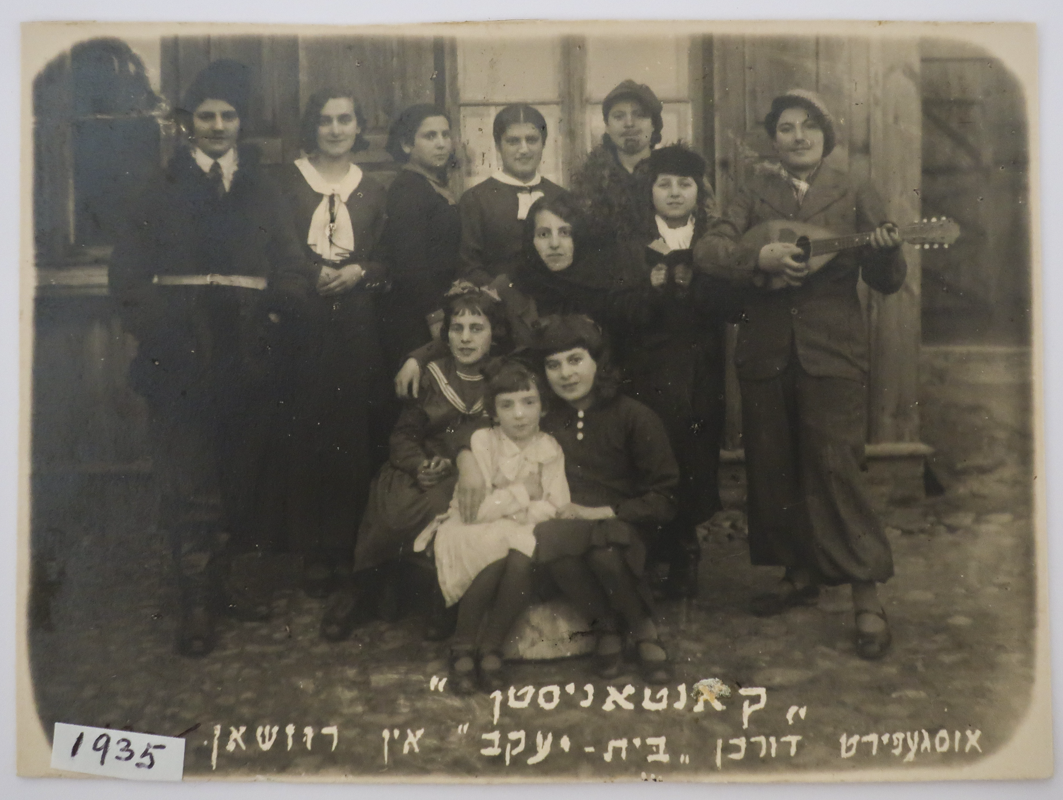
Devorah’s first teaching position was in 1935 in Ruzhan, a town with a population of 4200, of which 1800 were Jewish. Her school had thirty pupils; as with other teachers, her responsibilities included teaching, running a Basya Shabbos program for young girls, running a Bnos program for older girls that included weekday activities, and leading such extracurricular activities as putting on a play. She was nervous, as this was a big undertaking for a nineteen-year-old fresh out of seminary, but she was well received.

Lechowitz
Devorah took on a new teaching position the following year in Lechowitz. She always said she should have kept her first job, although in retrospect it was probably a good thing she got out of Ruzhan. Soon after she left, anti-Jewish riots broke out in Ruzhan, which continued for several years. In Lechowitz, Devorah taught kindergarten and ran a Bnos chapter.


Slonim, Poland (part II)
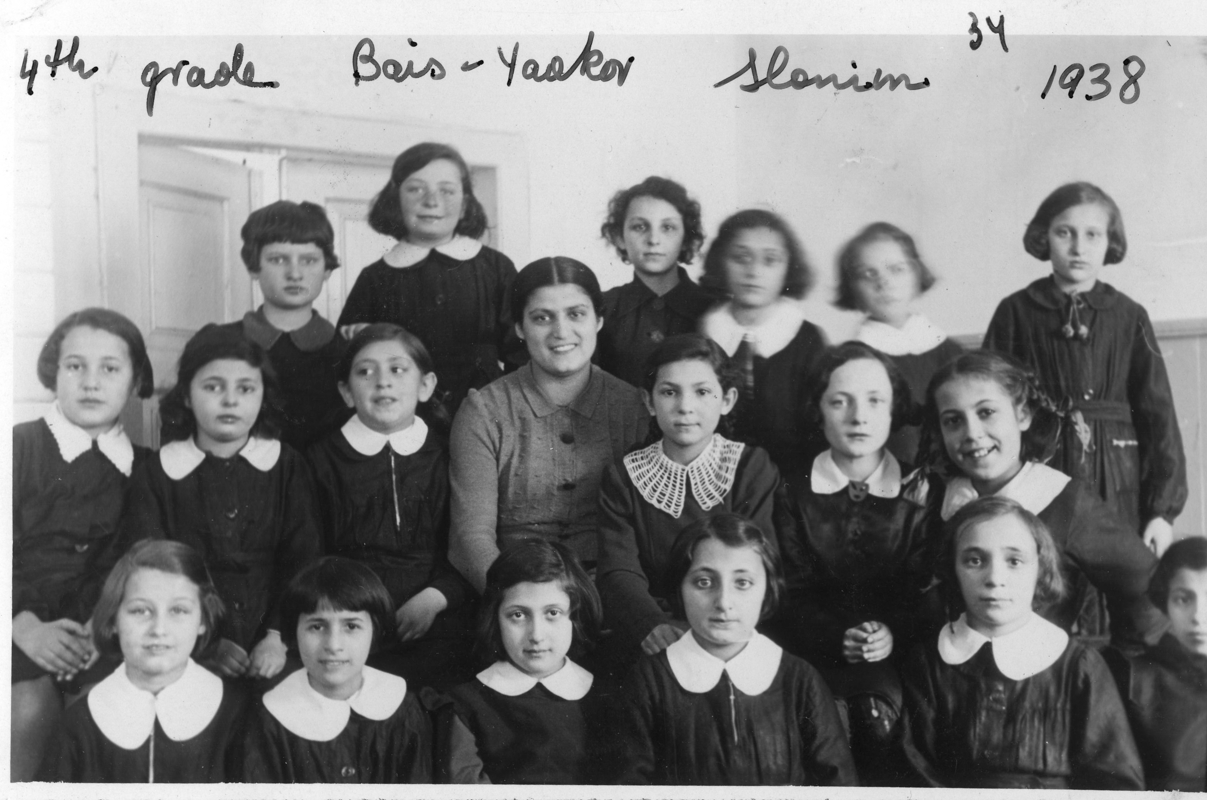
In 1937, Devorah returned to her hometown of Slonim, where she was quite happy. Graduates from the Bais Yaakov seminary were required to teach somewhere other than their hometown. Since enough time had passed, Devorah felt that she could return to teach in Slonim, where she could spend time with her family. She became good friends with the other teachers at the Bais Yaakov, a full-day school. However, more and more chaos and terror began to take hold of Poland. On September 1st, 1939, the Germans invaded, terrorizing Jews as they went. On September 17th, the Russians invaded eastern Poland, taking the town of Slonim two days later. Many Jews fled to the Russian areas to avoid the Nazis, but ended up facing severe mistreatment all the same. Devorah decided to stay in Russian-controlled Slonim to teach 1st grade. By the end of 1939, the Russians announced a new school calendar that changed the week to a six-day week, meaning that Devorah would be required to work on Shabbat. This was the impetus that made her decide to leave Slonim. She fled on New Year’s Eve, a holiday, giving her an extra day before her absence was noticed.
She left with two younger girls from Slonim and her nephew Shlomo (her sister Feigel’s sixteen-year-old son). They took a train to Lida, and then walked over thirty kilometers to Vilna. At the border, they were caught by a guard, whom they bribed with a gold coin. Devorah had made the first step on her long journey toward freedom.


Vilna (modern day Lithuania)
In 1940, Vilna was a neutral city – though it was soon annexed by the Soviet Union. Devorah was proud of how well she fared there. She earned money knitting sweaters and giving lessons in Hebrew and tutoring religious subjects. She was excited to be close to many luminaries of the Yeshiva world, as well as the women of that world, especially others who had studied at the Bais Yaakov teacher’s seminary. She sold copies of the Bais Yaakov Journal (which by then had temporarily ceased operations) at weddings, to raise money for Bais Yaakov. On one such occasion, she met her future husband Rabbi Moses J. (Mosheh Yeshayah) Cohn. They corresponded and visited each other when Devorah later worked as a governess in Radviliski. Moses was a student at the Mirrer Yeshiva, and he helped in the complex process of securing transit visas through Japan issued by the Righteous Gentile Chiune Sugihara and exit visas issued by the NKVD (the KGB). Most of the Yeshiva was able to escape with these visas. In late 1940, she received a letter from Moses: URGENT. COME TO VILNA. YESHIVA BEGINNING TO MOVE. Devorah returned to Vilna, and she and Moses were married in a civil ceremony on January 3, 1941, so that her name could be added to his exit papers. Though they were legally married, they did not consider themselves married because they had not yet had a Jewish wedding.


The Journey
Devorah and Moses boarded the train to Moscow in early 1941. They took the Trans-Siberian Railroad on the two-week trip to Vladivostok, a city on the south-eastern coast of Russia, where they boarded a boat (the Amakusa Maru) to Tsuruga, Japan. Once in Japan, they were aided by the Japan Tourist Bureau, and settled in Kobe. It was in Japan that they first felt that they could breathe a sigh of relief, that they were no longer in danger.

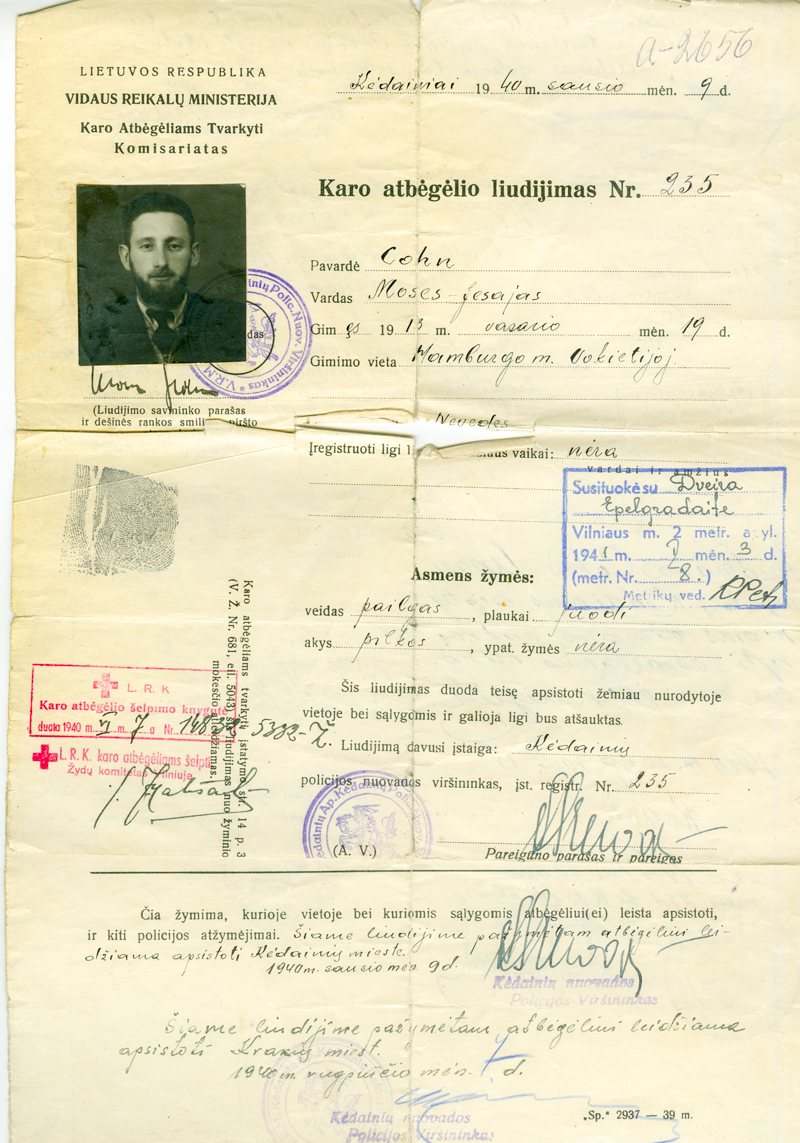
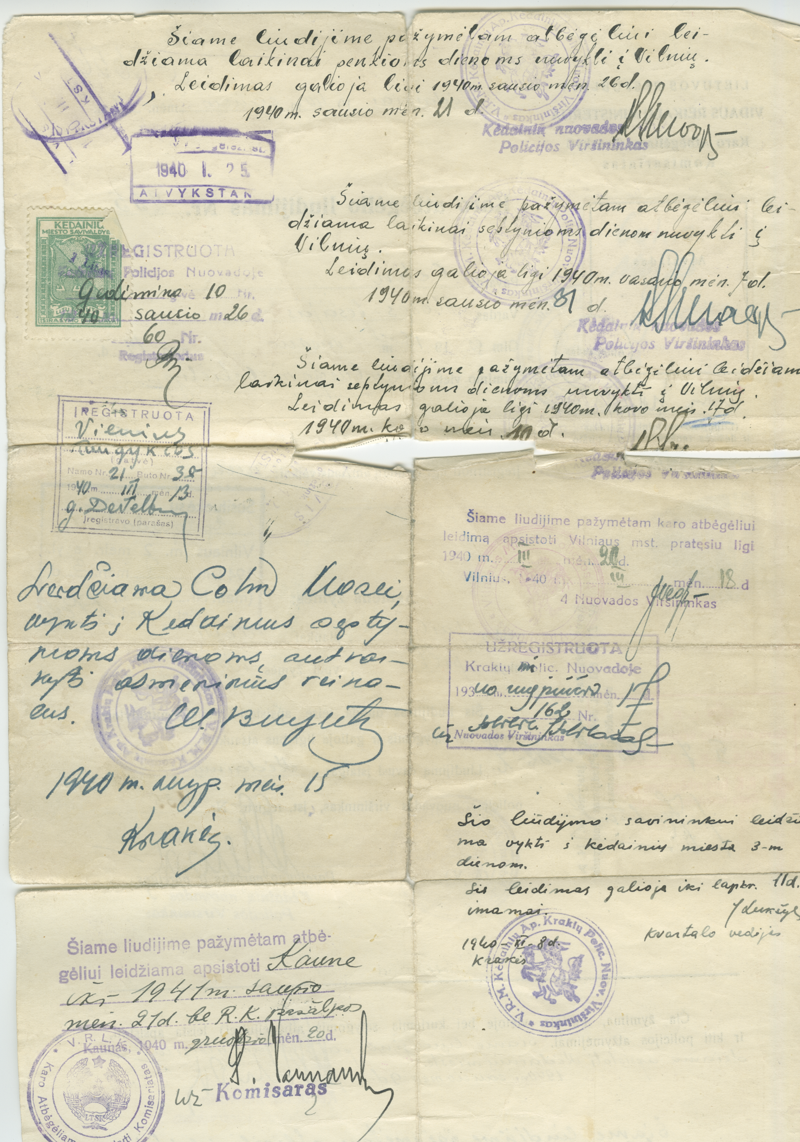
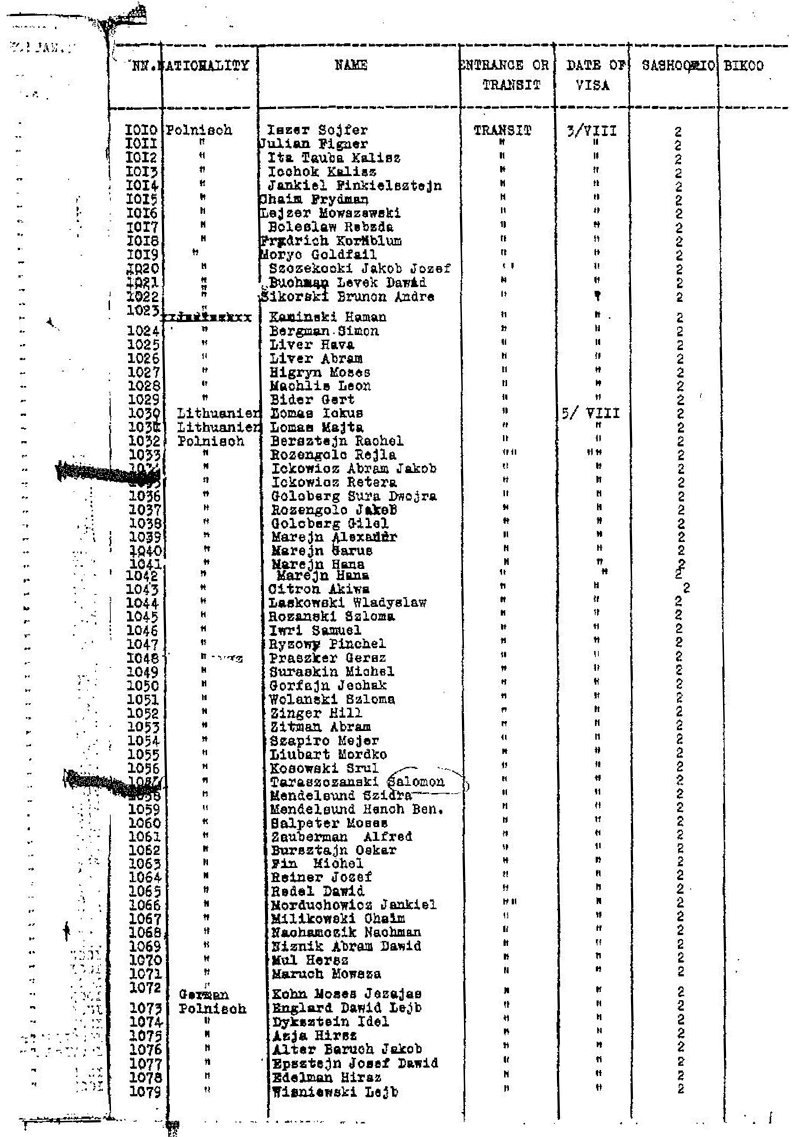
Kobe, Japan
In Kobe they were helped by “JewCom,” the community of 25 Ashkenazi families living in Kobe. “JewCom” had promised Japan to support refugees without relying on state services, with help from the American Joint Distribution Committee. Their visas were extended beyond two weeks, and Devorah and Moses remained in Kobe until June.
Immigration to America was extremely restricted, but Moses’s cousin Martin Morton, who lived in Cambridge, Massachusetts, provided the affidavit by sponsoring the application, making himself financially responsible and securing the guarantee that Moses would be hired as a teacher in a Jewish school.
On June 14th, 1941, the two set sail aboard the Kamakura Maru. They first entered the United States in Honolulu, Hawaii, and eventually landed in San Francisco. The ship landed on Shabbat, and following halakhah, they refused to disembark (and were allowed to remain) until the conclusion of Shabbat.

America
Devorah initially lived with her brother in New York, while Moses lived in Boston. They wrote letters to each other before finally marrying, in a Jewish ceremony, on November 6th, 1941. Their first child, a son named Yaakov Zundel, was born on December 26th, 1942. More children followed: Avivah Rivkah, Reuven Zvi, and Eliezer Binyamin. Her grandchildren are Tova (Yasnyi) Salomon, Shoshana (Yasnyi) Grossbard, Akiva Yasnyi, Naftali Cohn, Beruria Cohn Novich, Benjamin Cohn, Daniel Cohn, Orli (Cohn) Yehud, Nili (Cohn) Stein, Ehud Cohn, Eliana Cohn, and Amichai Cohn.
Devorah initially taught night classes for women seeking to learn Hebrew. Once her kids were all in school, in 1960, she began teaching religious subjects to 3rd graders at Maimonides School, a co-ed modern Orthodox school in Boston. Moses also taught at Maimonides, soon becoming the principal, a role he held until 1978. Moses was the principal of Maimonides School for 31 years. Devorah taught for four decades at Maimonides, until the year 2000, eventually switching from 3rd grade to special one-on-one teaching. She was known for creative and engaging assignments – like the students imagining they were Avraham or Sarah and being told to leave home for a faraway place – and she was both beloved and respected by generations of students. Throughout her life, Devorah was very involved in the Boston Jewish community, founding the Nshei Agudas Yisrael of Boston and raising money to build a mikveh. She was also involved in the Maimonides School Ladies Auxiliary and the Maimonides School PTA.
Over the years, Devorah Cohn spoke with increasing frequency about her time in Bais Yaakov, recognizing herself as a source of memories about the school system in its prewar flourishing and attempting to convey these memories to her descendants and beyond. For instance, she gave a talk on the subject for her great-granddaughter’s bat mitzvah and was interviewed repeatedly by her children and grandchildren.
For more photographs, see timeline of Devorah Epelgrad Cohn.
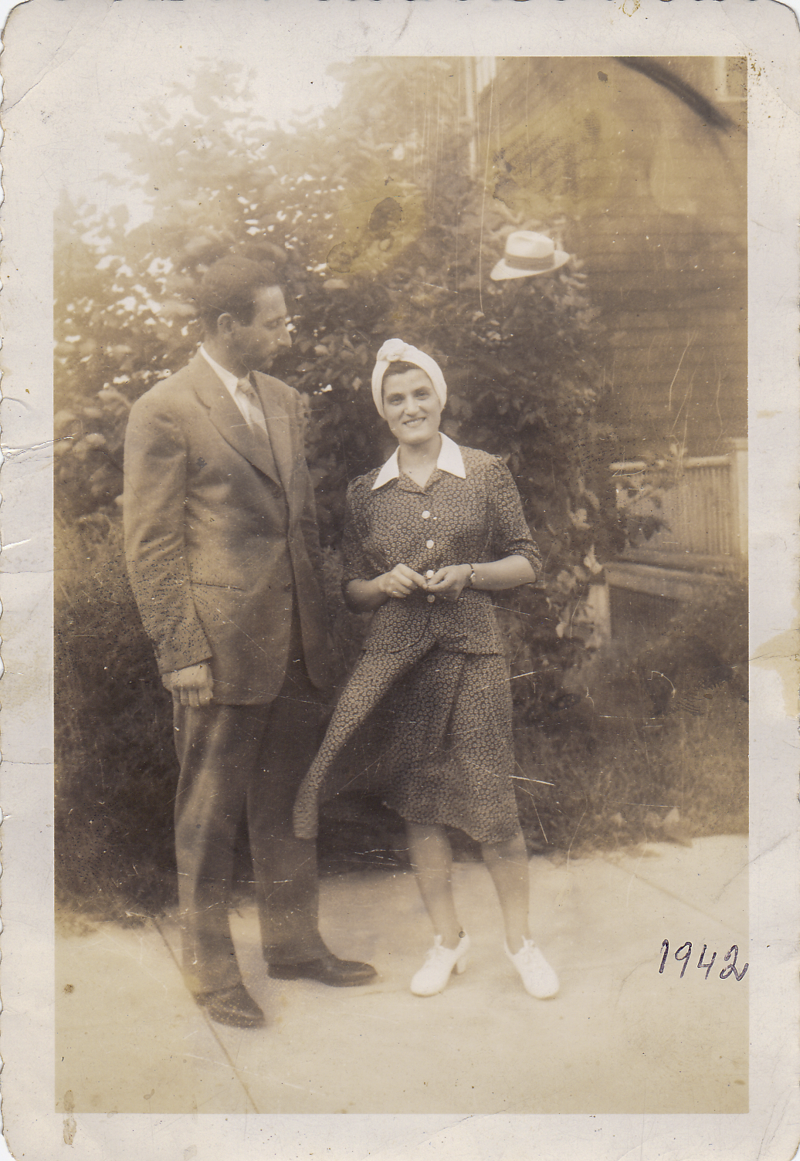


Images from the Cohn Family archive used with permission.